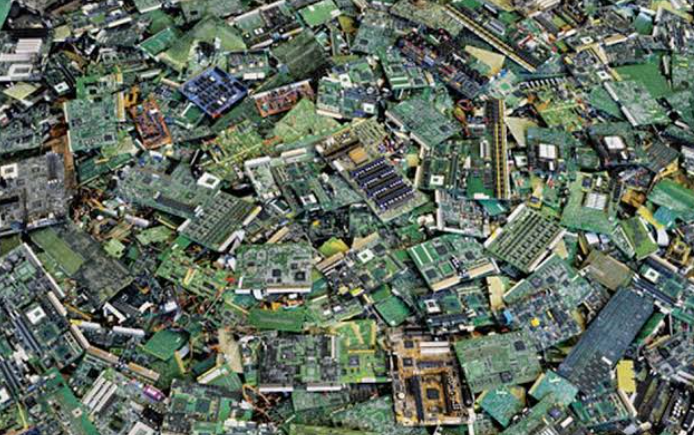

The phrase responsible recycling appears on nearly every collection service’s website, and it describes an outcome rather than a process. What actually happens to a discarded device after it leaves a collection point is determined by a chain of commercial decisions, each made on economics, and the destination at the end of that chain varies enormously.
Tracing that chain is not straightforward, which is precisely the problem. Material changes hands several times between a drop-off bin and a smelter, and each transfer is an opportunity for the material to take a cheaper path.
Understanding those flows is what makes the e-waste environmental impact legible, because the harm associated with discarded electronics is not evenly distributed. It concentrates in specific places, at specific stages, and almost always at the point where material has moved beyond anyone’s ability to account for it.
The Legitimate Chain
A properly handled device moves through a sequence that is well established and reasonably transparent.
Collection aggregates material from consumers, businesses, and municipal programs. Processing sorts it, removes batteries and hazardous components, tests for reuse, and mechanically separates the remainder into material streams. Refining converts those streams into commodity-grade material, and this stage is highly specialized, with different facilities handling precious metals, base metals, plastics, and battery chemistries.
Almost no single facility handles every stream, so material legitimately moves between specialists. A processor in one country routinely sends circuit board fragments to a smelter in another, because precious metal refining capacity is concentrated in a small number of facilities globally.
That international movement is normal commerce, not a scandal. The distinction that matters is whether the receiving facility is an audited industrial operation or an informal yard.
Where the Chain Breaks
The failure point is generally the broker.
A broker collects material and sells it onward without processing it. Some brokers sell exclusively to audited processors and are a legitimate part of the supply chain. Others sell to whoever pays most, and the highest bidder is frequently an operation with the lowest costs, which usually means the fewest environmental controls.
Mislabelling is the mechanism that enables this. Shipments of broken equipment are declared as used goods for resale, which faces far fewer restrictions than waste. Once material is described as functional equipment, it moves through channels that waste could not use.
Enforcement is genuinely difficult. Inspecting containers requires resources, and distinguishing a container of repairable equipment from a container of scrap requires opening and examining it.
The material that takes this path is disproportionately the low-value fraction, since high-value material is worth processing properly. Broken screens, old plastic housings, and mixed low-grade boards are the categories most likely to disappear into informal handling.
What Informal Processing Involves
The practices in informal recovery operations are well documented and consistently severe.
Cables are burned in open fires to remove insulation and expose copper, releasing dioxins and furans.
Circuit boards are heated over open flames or hotplates to melt solder and release components, exposing workers directly to lead fumes.
Acid baths are used to dissolve gold from connectors, and the spent acid is typically discharged onto ground or into watercourses.
Residues are burned or dumped.
The health consequences fall on workers and on the surrounding communities. Elevated blood lead levels, respiratory disease, and adverse birth outcomes are consistently documented near these operations, and children are frequently involved in the work.
The environmental consequences persist long after any given operation ceases, since soil and groundwater contamination does not resolve on its own.
Why the Simple Narrative Is Outdated
It would be convenient to conclude that all exported material ends up this way, and that is not accurate.
Domestic processing capacity in North America and Europe has grown considerably. Certification schemes now require downstream tracking and auditing, and the stricter ones prohibit export of hazardous material to developing countries outright. Several receiving countries have tightened import controls significantly, which has reduced the volume moving through the older channels.
Formal recycling capacity has also developed in countries that were previously destinations for informal processing, which means material arriving there today may well go to a modern facility.
The picture is genuinely mixed, and the variable is not geography. It is whether the specific chain your material entered has accountability in it.
The One Question That Determines the Outcome
For an individual or an organization handing over equipment, almost everything depends on a single question: can this operator tell me, specifically, where the material goes after them?
An operator who processes in house and can name their downstream refiners is accountable. An operator who cannot answer, or answers in generalities, is a broker, and material entering a broker has entered a chain nobody is tracking.
Certification helps because it requires that tracking, though it should be verified as current and as held by the entity you are actually dealing with rather than by a partner they reference.
Beyond that, the leverage available is modest but real. Keeping equipment in service longer means less material entering the chain at all, and functional equipment passed on for reuse never enters the recovery stream in the first place. For everything else, the choice of who receives it is the only point at which the outcome is genuinely decided.
